
Forest for Growth-stage Businesses
Scaling fast is hard. Planning for it shouldn’t be.
At 250 people, the tools that got you here won’t get you there. Forest connects strategy, capacity, and finance as your business grows.

Why growth-stage businesses choose Forest
At 250 people, the complexity multiplies. Multiple teams, multiple budgets, multiple strategic priorities, all moving at different speeds, tracked in different tools, reported in different formats. The COO is spending entire weeks reconciling data before a board meeting that should take an afternoon. Strategic decisions that should take hours take weeks because nobody has a current, complete picture of what the business is committed to and what it costs.
Where Forest goes further
Forest connects the picture. One platform where strategy, capacity, and finance move together in real time, so the leadership team stops reacting to what happened and starts directing what happens next.
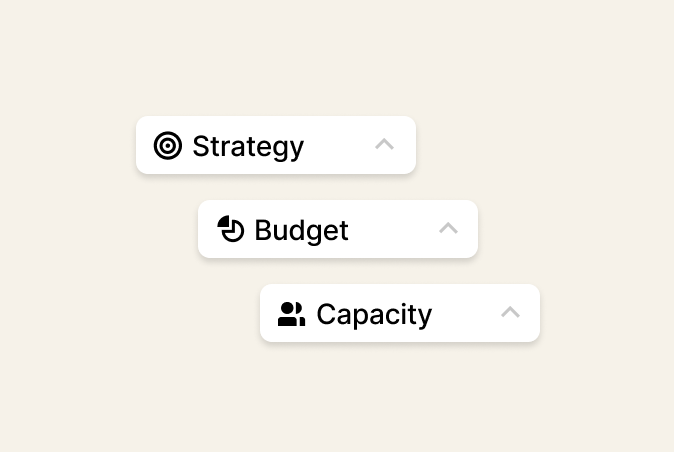
One plan across every team
At this stage, every team has their own tool, their own view, and their own version of the plan. Forest gives every team their execution view while giving leadership visibility across the whole, so priorities are set once and cascade down to every function delivering them.
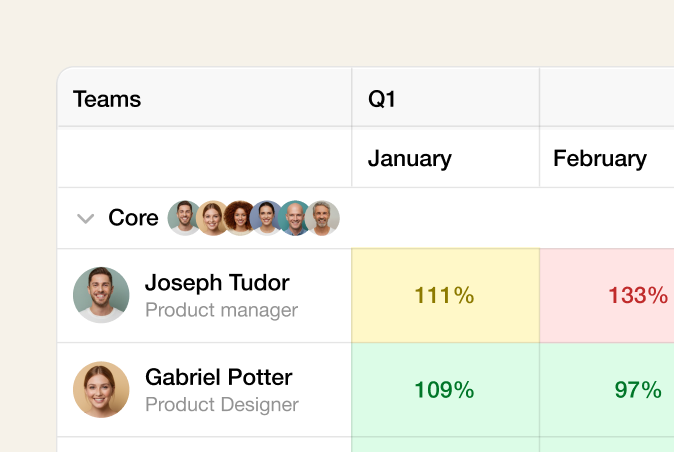
Capacity intelligence across every team
As headcount grows, capacity visibility becomes critical. Forest maps available capacity against strategic demand across every team, role, and quarter — so overcommitment is caught before it becomes a missed quarter, not after.
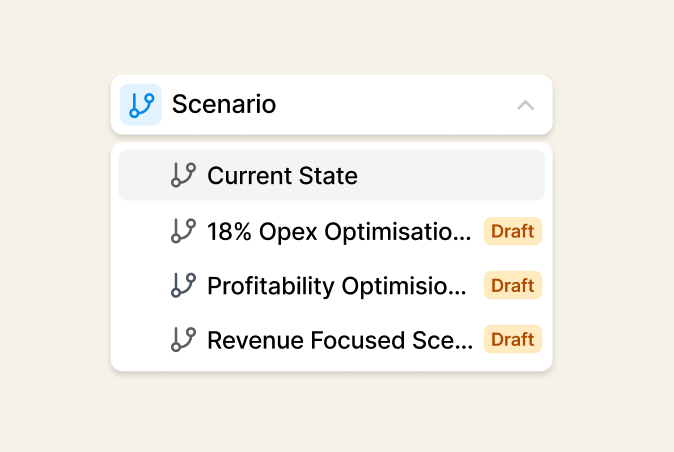
Scenario planning for a business that moves fast
Growth-stage businesses face more strategic pivots than any other stage. Forest lets you model the financial and resource impact of any change before committing — so decisions arrive at the table already stress-tested, not made on instinct.
What changes when strategy stays connected at scale
From cross-functional alignment to board-level reporting — Forest closes the gap between what was planned and what gets delivered as your business grows.
Cross-functional alignment without the meetings
Every team works from the same connected plan, so alignment happens in the platform, not in a weekly sync that eats everyone’s afternoon.
Budget visibility that scales with the business
As teams and initiatives multiply, Forest tracks spend against every initiative in real time, so financial visibility doesn’t degrade as complexity grows.
Board confidence at every stage
Initiative progress, budget utilisation, and capacity allocation always current, so investor and board updates reflect reality, not a carefully assembled version of it.
Strategic decisions that land on evidence
When a priority changes, Forest shows the full downstream impact immediately, so the leadership team makes decisions with confidence, not with their fingers crossed.
What leaders are asking
Great businesses don’t run on disconnected plans
Discover how Forest connects strategy, capacity, and finance into one living platform, and what that means for the way you lead.